

Bio
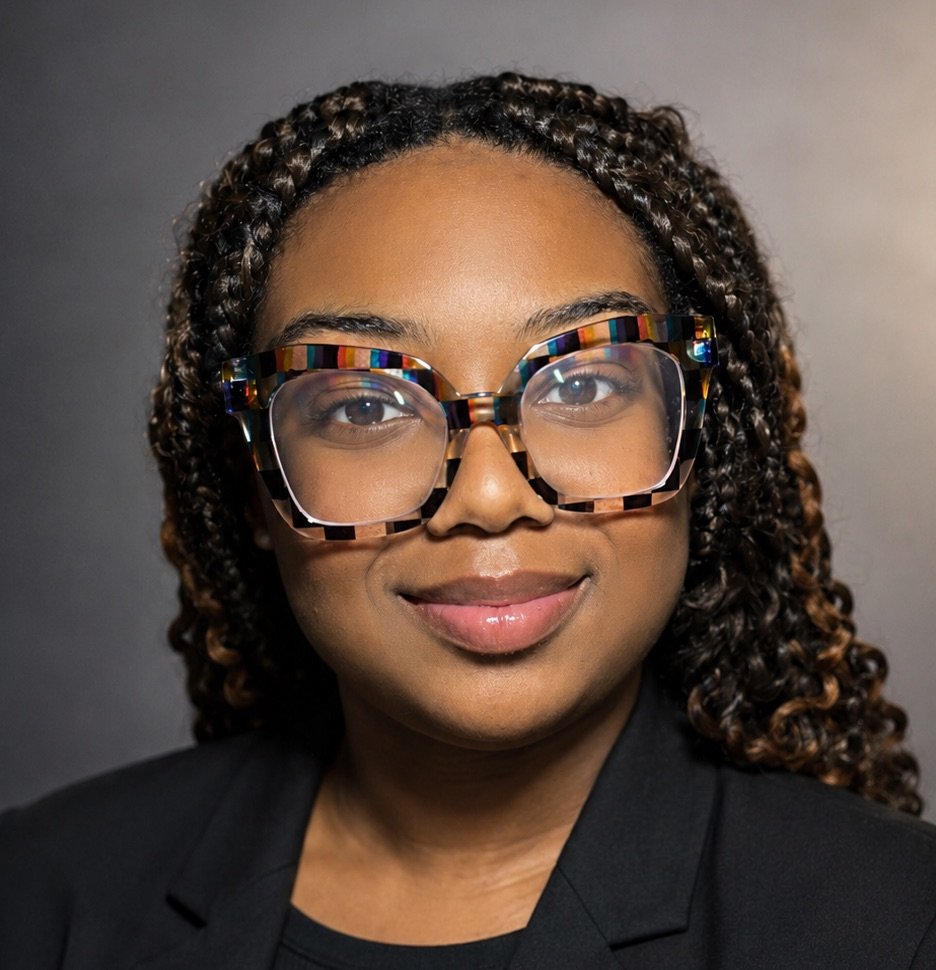
Hello!Adajha Brown (b. 2002, Charlotte, North Carolina) is an artist based in Charlotte whose work explores emotional processing, identity, and personal experience through painting, drawing, mixed media, and digital sketching. Influenced by the emotional relationship between nature, memory, and self-expression, Brown creates stylized imagery that combines exaggerated characters, symbolic forms, floral motifs, and saturated color palettes to communicate feelings that are often difficult to articulate verbally. For Brown, both art and nature have long functioned as emotional outlets and spaces for reflection, making the combination of the two a natural foundation within her visual language.
Her practice balances playful, decorative imagery with deeper themes of vulnerability, overstimulation, and human connection. Through repetition, layering, and stylization, Brown creates emotionally immersive compositions that encourage viewers to reflect on their own internal experiences while recognizing pieces of themselves within the work. Instead of relying on direct narrative, her paintings use symbolism, expressive color relationships, and forms to communicate psychological atmosphere and emotional tension.
Brown’s work has been exhibited at the North Carolina Central University Art Museum in both the Sophomore Exhibition and the New Horizons Senior Exhibition while earning her Bachelor of Arts in Studio Art. She is currently pursuing a Master of Fine Arts in Painting at the Savannah College of Art and Design and anticipates graduating in 2027.
As she continues developing her practice, Brown aims to expand her work into larger and more immersive formats while continuing to build a recognizable symbolic language. She hopes her work can serve as a space where viewers feel emotionally seen, understood, and connected, even without the use of direct explanation or words.
Artist Statement
I create stylized paintings and mixed-media works that use color, repetition, and symbolic imagery to communicate emotional experiences that are difficult for me to express verbally. Nature and art have always functioned as emotional outlets for me, helping me process different emotions, memories, and situations throughout my life. Because of this, it felt natural to combine the two within my work. Floral motifs, exaggerated characters, animals, and repeated symbolic forms became ways for me to translate emotions visually instead of explain them directly through words. My work functions less as direct narrative and more as emotional atmosphere, where color, gesture, symbolism, and stylization communicate feeling before language does.
I exaggerate facial expressions, simplify anatomy, flatten forms, and distort proportions in order to emphasize emotional presence over realism. Whether working with human figures, nature, animals, or hybrid-like characters, I am more interested in how the subject feels psychologically than how accurately it represents reality. I use Bright, saturated palettes often to attract the eye initially, but underneath the color is usually a sense of emotional tension, overstimulation, vulnerability, playfulness, or emotional masking. I use intense reds, deep blues, acidic greens, repeated shapes, and decorative floral elements to create layered emotional environments that shift between softness and discomfort.
I begin my process digitally, where I experiment with composition, stylization, symbolic elements, and color relationships before moving into painting and mixed media. Once translated into physical form, the work becomes slower and more labor-intensive through layering, revision, and repetition. I frequently revisit similar colors, floral imagery, and forms across multiple works, allowing emotional associations to build gradually over time. Repetition helps me develop a recognizable visual language while also reflecting how emotions and memories often repeat internally.
Although my work is rooted in personal experience, I intentionally avoid fully explaining the stories behind each piece. Instead, I want viewers to emotionally recognize something within the work for themselves. In many ways, my paintings function as representations of who I am without relying on words, using color, symbolism, stylization, and recurring imagery to communicate emotional experiences that feel both deeply personal and widely relatable.